


















China Unveils Analog Chip 1,000 Times Faster Than Nvidia’s GPUs

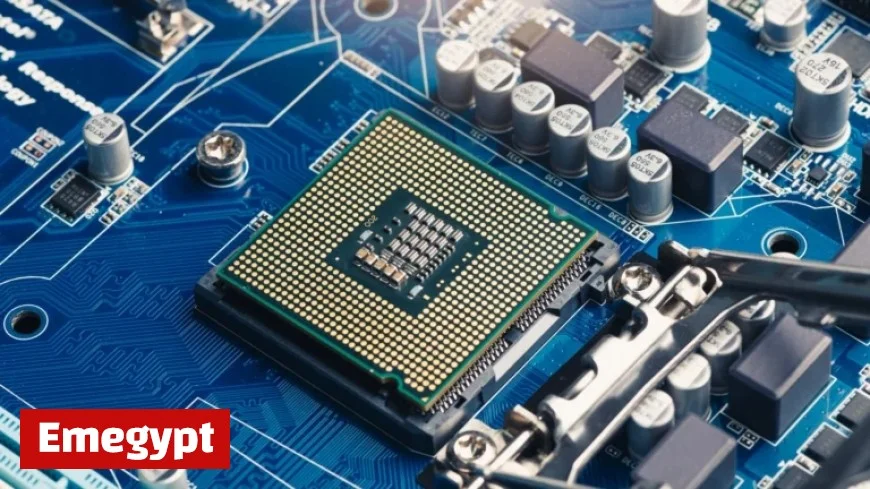
Scientists in China have unveiled a groundbreaking analog chip that significantly enhances computing speed and energy efficiency. This new device reportedly surpasses high-end graphics processing units (GPUs) from Nvidia and AMD by a remarkable factor of 1,000.
Overview of the New Analog Chip
Developed by researchers at Peking University and detailed in a study published on October 13 in *Nature Electronics*, the analog chip addresses critical challenges in modern computing. These challenges include the energy and data limitations faced by digital chips in fields like artificial intelligence (AI) and 6G technology.
Key Features and Performance
- Outperforms Nvidia and AMD GPUs by 1,000 times.
- Uses 100 times less energy than standard digital processors.
- Maintains accuracy comparable to digital processors for complex calculations.
The chip excels in solving matrix inversion problems, vital for modern communication technologies, including massive multiple-input multiple-output (MIMO) systems.
How the Analog Chip Works
This analog design leverages resistive random-access memory (RRAM) cells to process information through continuous electrical currents rather than binary code. This approach minimizes the energy-intensive task of moving data between the processor and external memory.
The device features two distinct circuits. One circuit delivers rapid but approximate calculations while the other refines these results for enhanced precision. This dual approach effectively combines the rapid processing capabilities of analog computing with the accuracy of digital systems.
Potential Applications
The new chip’s efficiency is particularly relevant for data-intensive applications where traditional digital processors struggle. It offers promising solutions for:
- Artificial Intelligence development
- 6G communication systems
- Applications that require real-time processing of large volumes of data
Historical Context and Future Directions
Analog computing has historical roots, dating back over 2,000 years to devices like the Antikythera mechanism. However, it has often been dismissed in favor of digital processors. Recent technological advancements in memory hardware are bringing analog systems back into consideration.
The researchers indicated plans for future enhancements, focusing on larger, fully integrated chips capable of solving more complex problems efficiently. The potential for mass production underlines the chip’s practical applicability in the near future.
In conclusion, the introduction of this analog chip marks a significant milestone in computing technology, promising to reshape the landscape of AI, communications, and data processing.