













Mark Cuban Takes Stand Against Dark Money and Super PACs

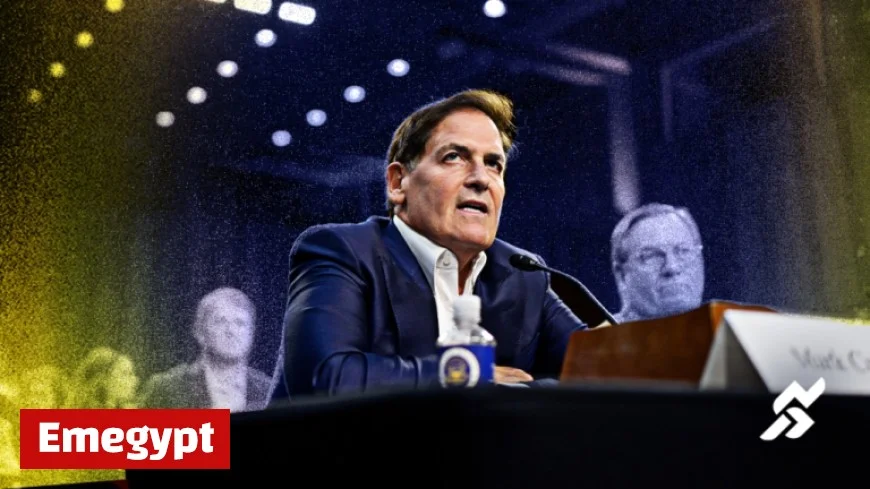
Mark Cuban, a noted minority owner of the Dallas Mavericks, is actively opposing the influence of dark money in politics. Alongside four other billionaires—William von Mueffling, Reid Hoffman, Steve Jurvetson, and Vin Ryan—Cuban has filed an amicus brief. This legal document argues that their wealth should not translate into greater political clout than that of ordinary citizens.
Context of the Amicus Brief
The case at hand, Dinner Table Action & For Our Future v. William J. Schneider et al., stems from a challenge to a Maine campaign finance law. This law aims to limit contributions to super political action committees (super PACs) and uphold the principle of fair political influence for all citizens. Cuban and his co-authors contend that this law is reasonable and constitutional.
Critical Elements of the Legal Framework
The Maine law places a limit of $5,000 on super PAC contributions and mandates transparency regarding donor identities. Super PACs are also required to disclose financial support related to advocacy for or against candidates. This initiative was driven by overwhelming voter support in a recent referendum, backed by organizations like Equal Citizens and their founder, Lawrence Lessig. Comparatively, federal law permits unlimited contributions to super PACs, raising concerns about corruption and accountability.
Ongoing Legal Battle
The U.S. Court of Appeals for the First Circuit is currently reviewing an appeal following a ruling by U.S. Magistrate Judge Karen Frink Wolf. She deemed the aforementioned Maine law unconstitutional, citing First Amendment protections of political speech. Her decision referenced the Supreme Court’s 2010 Citizens United v. FEC ruling, which challenged limits on independent political expenditures.
The Billionaires’ Stand
- Cuban’s amicus brief emphasizes the dangers posed by unlimited super PAC funds.
- The brief highlights the “bet-hedging” behavior of super PACs, contributing to opposing candidates to curry favor with potential winners.
- It warns that such practices risk actual corruption and the public’s perception of it.
Implications on Democracy
Cuban and his colleagues believe that regulating super PAC contributions will protect democracy, particularly in states like Maine where small amounts of external money can disproportionately influence local races. Their position frames the law as a necessary measure for maintaining accountability and transparency in American politics.
Political Landscape and Contributions
The influential role of wealthy donors in politics is underscored by the actions of other sports team owners. Rob Walton of the Denver Broncos and Woody Johnson of the New York Jets have also made significant donations to super PACs, reflecting a broader trend. Notably, Miriam Adelson, now the majority owner of the Mavericks, contributed $100 million to support Donald Trump’s candidacy in 2024.
Future Proceedings
This legal appeal promises to have long-lasting consequences, as its outcome may redefine the landscape of campaign finance. With hearings likely extending into 2026, the implications for future elections are profound. Cuban’s involvement aims to highlight the urgent need for campaign finance reform that upholds the ideals of democracy.