

















British Columbia Unable to Block New Pipeline on Its Territory

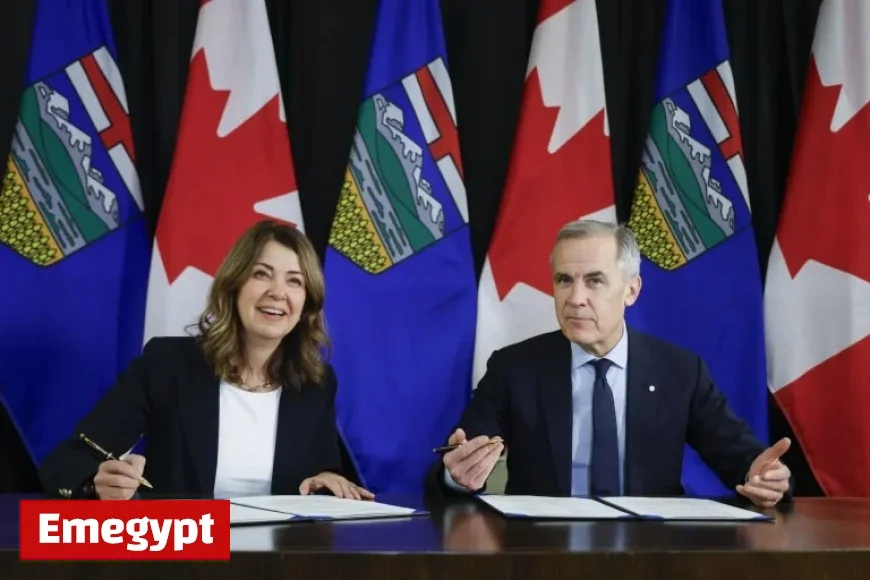
British Columbia faces challenges regarding the approval of a new pipeline project within its territory. Prime Minister Mark Carney has not secured the province’s consent for the proposed pipeline during recent discussions with Alberta Premier Danielle Smith. Instead, he mentioned the need for substantial economic benefits to the people of British Columbia.
Pipeline Project Overview
Officials clarified that while collaboration from British Columbia is necessary, the province lacks the power to veto additional bitumen transport to the Pacific Ocean. The federal and Alberta governments will consult with British Columbia, with hopes for an agreement based on shared interests.
Project Timeline and Goals
- Deadline for pipeline proposals: July 1, 2026
- Projected capacity: 1 million barrels of oil per day
- Requirement for Indigenous economic benefits and co-ownership
Alberta is aiming to boost its oil production and increase exports to Asia, justified by changing international contexts affecting national security. The exact route for the pipelines is yet to be finalized, and approvals will be managed by the new Federal Major Projects Office, which will take a maximum of two years.
Environmental Regulations and Economic Implications
The Canadian government has indicated that it will allow the export of bitumen from a deep-water port to Asian markets. This may involve modifying the tanker moratorium law. The Alberta government, however, has expressed concerns over the timeline for this initiative.
Reactions from Political Leaders
Conservative leader Pierre Poilievre has unsuccessfully sought a timeline for construction commencement. In contrast, Bloc Québécois leader Yves-François Blanchet has pledged to uphold British Columbia’s right to reject a pipeline project.
Premier Danielle Smith celebrated the agreement with Ottawa, citing eight out of nine requested environmental regulatory relaxations, including the abandonment of the emissions cap. The agreement also suspends regulations impacting natural gas plant construction and sets Alberta’s industrial carbon price cap at $130 per ton of greenhouse gas emissions (GHG).
Future Commitments
While the current national GHG pricing plan aims for $170 per ton by 2030, Alberta’s approaches are at odds with these goals. Premier Carney affirmed his commitment to the Paris Agreement while also revealing Alberta’s intentions to achieve carbon neutrality in 25 years and a 75% reduction in methane emissions by 2035, based on 2014 levels.
Investment in carbon capture and storage, alongside facilities for artificial intelligence data, are anticipated as part of Alberta’s strategy moving forward.