
















Minorities Celebrate as Pope Leo Visits Turkey with Renewed Space

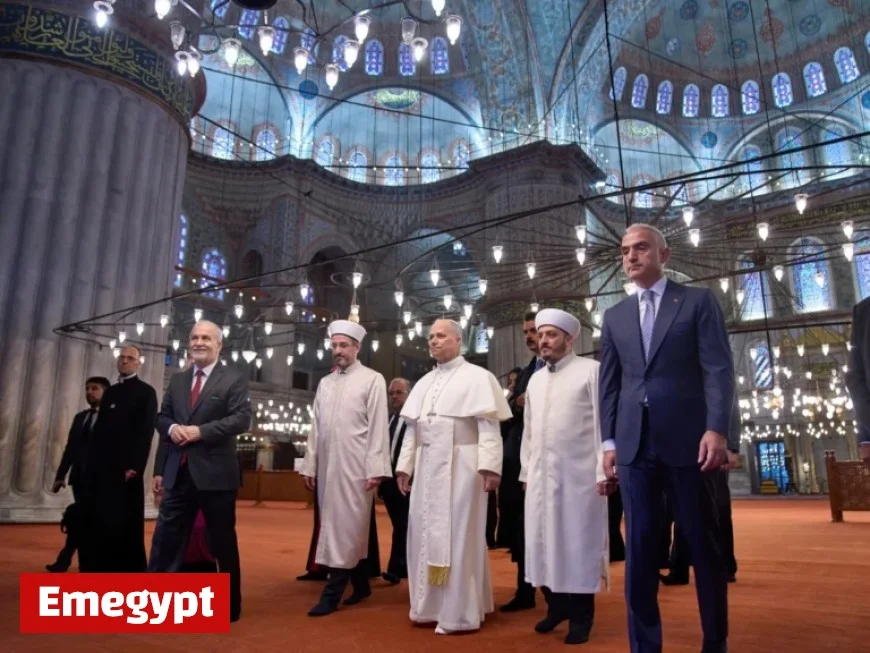
Pope Leo XIV’s recent visit to Turkey marks a significant moment in the relationship between the state and its minority communities. This trip represents the pontiff’s first international journey as the leader of the Roman Catholic Church, chosen specifically for its deep symbolism in a predominantly Muslim nation. Leaders from minority groups view this visit as indicative of a new era of openness in Turkey.
Pope Leo XIV’s Engagements in Turkey
During his time in Turkey, the pope engaged in constructive discussions with President Recep Tayyip Erdogan. His itinerary included meetings with various religious leaders and visits to historic places of worship, showcasing Turkey’s rich tapestry of faith, where Christianity and Islam have coexisted over centuries.
Context of Minorities in Turkey
- Turkey has a population exceeding 80 million, with over 99% identifying as Muslim.
- Historic Christian communities, including Greeks, Armenians, Syriacs, and Latins, have existed for centuries.
- Minority leaders report a more favorable environment for their communities than in decades past.
The populations of these minorities, once in the hundreds of thousands, have drastically diminished due to historical challenges, including the 1942 Wealth Tax and subsequent pogroms that devastated non-Muslim neighborhoods. According to Can Ustabası, head of the Minority Foundations Representative Office, the remaining communities now total approximately 85,000, reflecting a drastic decline.
Legal and Social Changes for Minorities
Changes in Turkish laws and increased government resolve have created a more favorable climate for minority foundations since the 2000s. Specific reforms include:
- The Foundations Law, originally an Ottoman-era legislation, has been adapted to allow better management of non-Muslim property.
- Reforms initiated from 2003 to 2008 have enhanced the ability to register properties and reclaim assets lost under previous retaliatory policies.
- A 2011 government decree facilitated the return or compensation for previously seized properties.
Ustabası emphasized that the current atmosphere represents one of the most comfortable periods for minority communities since Erdogan’s administration began in 2003. The restoration and return of properties have not only addressed material losses but have also bolstered the sense of belonging among these minorities.
Challenges Remain
Despite these advances, challenges persist in achieving complete equity for minority communities in Turkey. Ongoing legal ambiguities and administrative hurdles still hinder full autonomy and governance of minority foundations. Legal expert Kezban Hatemi notes the change in state attitudes is not yet universal, as bureaucratic obstacles continue to exist.
Impact of Pope Leo XIV’s Visit
Pope Leo XIV’s visit sends a powerful message of tolerance and unity within a Muslim-majority nation. Turkish-Armenian journalist Etyen Mahcupyan suggests this trip has significant political implications. It symbolizes a willingness to connect with global communities, including non-Muslim minorities residing in Turkey.
With Turkey’s aspirations for European Union membership in mind, this visit could bolster relations and enhance the standing of minority communities in Turkish society, encouraging further reform and integration.
As Ustabası remarked, the presence of the pope in Turkey signifies a groundbreaking moment, demonstrating that diverse faiths can coexist harmoniously. The future of Turkey’s minority communities might well depend on the momentum generated by such gestures of goodwill.