


















China’s BYD Constructing Massive Factory Exceeding San Francisco’s Size: What It Really Means

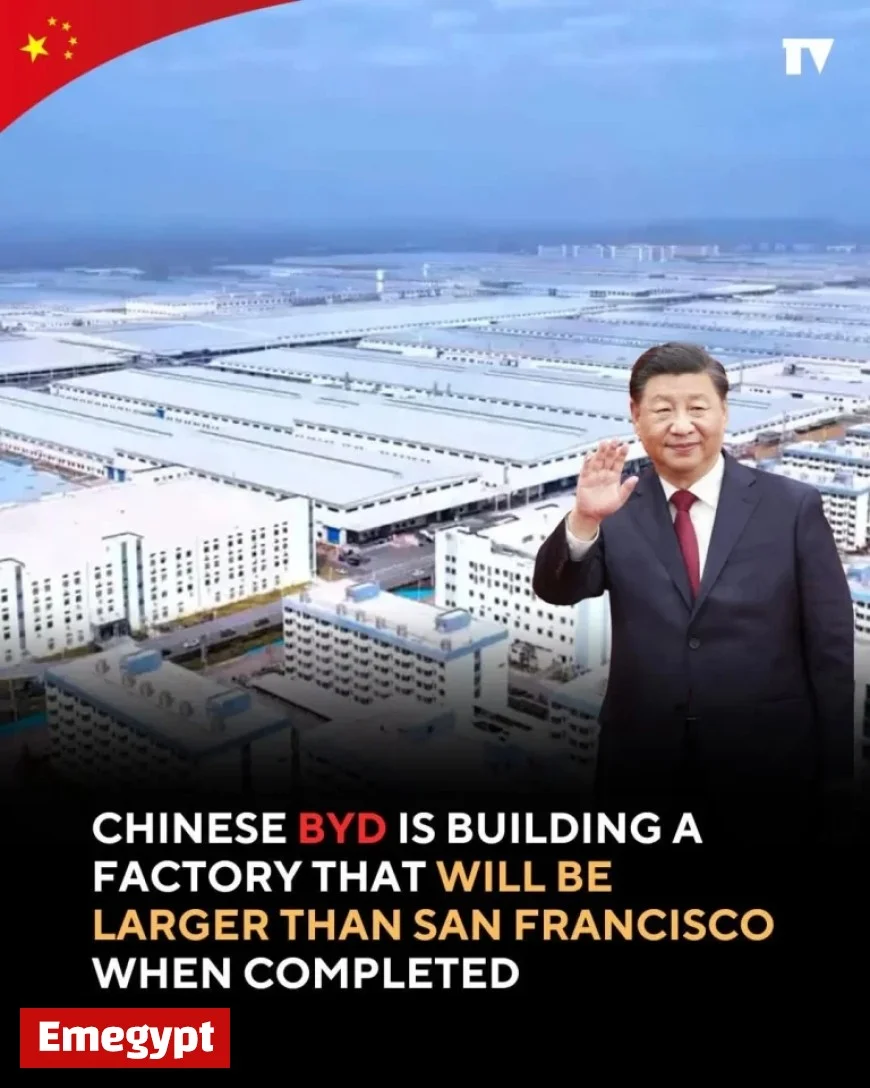
China’s BYD is currently developing a massive factory complex near Zhengzhou, which is gaining significant attention. This site is speculated to exceed the size of San Francisco, making it one of the largest industrial facilities globally. The ambitious project is expected to cover approximately 32,000 acres, surpassing the municipal area of the U.S. city.
BYD’s Megafactory: A Game Changer for the Industry
The expansive complex will consist of production halls, worker housing, sports facilities, and internal infrastructure — effectively creating a self-sustained “factory city.” While the exact square footage is debated, the scale of the operation is undisputed. Experts caution that numbers circulated may sometimes confuse total land ownership with the area’s actual construction.
Rationale Behind the Size
BYD’s extensive production facility aligns with its strategic response to soaring demand for electric vehicles (EVs). With revenue surging and vehicle output reaching millions, the company’s goal is to consolidate assembly lines, battery production, and parts suppliers in one location. This integrated approach enhances efficiency, reduces logistics costs, and ensures rapid scaling of production.
- Projected Production: The Zhengzhou site aims to manufacture over one million cars annually when fully operational.
The Integrated Factory-City Model
This new model includes dormitories, clinics, and retail spaces, echoing patterns seen in large Chinese industrial parks. By providing amenities near workplaces, BYD aims to improve the daily lives of its employees, reduce commuting time, and enhance labor stability. This creates a cohesive ecosystem where residents are interconnected with production activities.
Implications for Competitors
BYD’s vast facility provides substantial advantages in production capacity and cost efficiency. By leveraging economies of scale, the company strengthens its competitive edge in a volatile market. For international competitors, this presents challenges, as they may struggle to match BYD’s level of integration and local advantages.
Challenges and Considerations
While ambitious megaprojects offer various benefits, they also present challenges. Environmental impacts such as land use changes, water consumption, and emissions during and after construction are heavily scrutinized. Additionally, potential labor concerns and local service demands must be addressed as the workforce grows rapidly.
- Potential Issues:
- Environmental impacts
- Labor standards
- Infrastructure demands
Conclusion
Regardless of whether it truly outmeasures San Francisco, BYD’s Zhengzhou site exemplifies a significant trend in the automotive industry. Chinese manufacturers are increasingly establishing large, vertically integrated production hubs that redefine traditional boundaries between factories and urban environments. The consequences of this transformative approach will undoubtedly influence global automotive dynamics for years ahead.