












Venezuela Condemns Trump’s Airspace Closure Warning as a Colonialist Threat

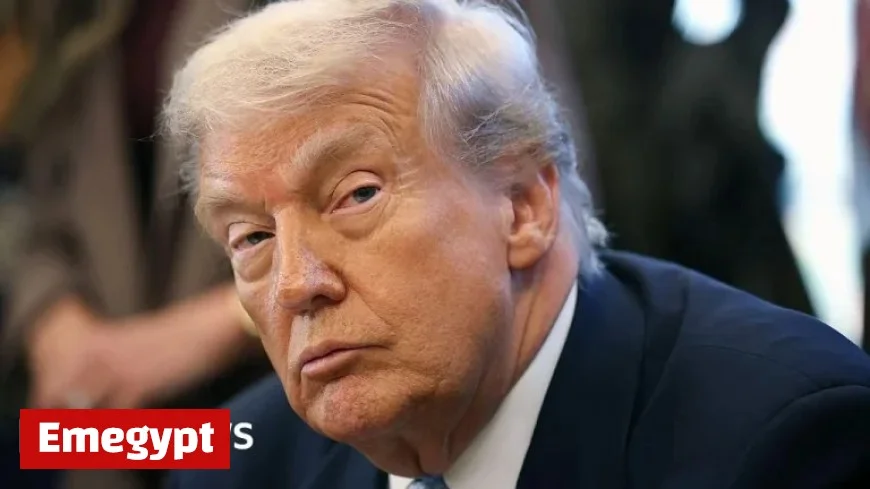
Venezuela has expressed strong condemnation of recent comments made by US President Donald Trump regarding the country’s airspace. Trump declared that the airspace above and surrounding Venezuela should be deemed closed, a statement that Venezuela’s foreign ministry labeled as an “extravagant, illegal, and unjustified aggression” against its people. Furthermore, the ministry accused Trump of issuing a “colonialist threat.”
Venezuela’s Response
The Venezuelan government asserts that the US lacks the legal authority to restrict another nation’s airspace. It has criticized Trump’s remarks amid increasing tensions surrounding US military activities in the region. According to Caracas, these actions are seen as a tactic to undermine President Nicolás Maduro’s government.
Military Presence and International Reactions
The US has established a military presence in the area, carrying out over 21 strikes against vessels it alleges are involved in drug trafficking, resulting in the deaths of more than 80 individuals. However, the evidence supporting these claims has not been provided publicly. Following Trump’s declaration, several US Congress members expressed concern, arguing that he has not sought necessary legislative approval for such aggressive posturing.
- Senate Democrat Chuck Schumer stated that Trump’s actions are steering the US closer to another foreign war.
- Republican Representative Marjorie Taylor Greene reinforced that Congress holds the constitutional power to declare war.
Days before Trump’s comments, the US Federal Aviation Administration (FAA) alerted airlines to increased military activities in Venezuela, prompting major airlines to suspend their flights. In response, Caracas revoked the take-off and landing rights of US airlines.
Military Exercises and Regional Context
In an act of defiance, the Venezuelan military conducted exercises along its coastal regions and showcased anti-aircraft weapons on state television. The US has deployed the USS Gerald Ford, the largest aircraft carrier, along with around 15,000 troops, emphasizing their mission to combat drug trafficking. This marks the largest US military deployment in the region since the Panama invasion in 1989.
Trump announced that efforts to combat drug trafficking in Venezuela “by land” would commence “very soon.” The Venezuelan government interprets these actions as an endeavor to topple Maduro, whose 2022 re-election faced condemnation for alleged rigging. Regional allies, such as Colombian President Gustavo Petro, criticized the US approach, portraying it as a means of exerting control over Latin America.
Designation of Terrorist Organizations
The US has labeled the Cartel de los Soles—an organization it claims Maduro leads—as a foreign terrorist group. This designation enables US law enforcement and military agencies to expand their powers to dismantle the cartel. In response, Venezuela’s foreign ministry has strenuously rejected this classification, condemning it as another act of aggression by the US.
The escalating rhetoric and military movements highlight the rising tensions between the US and Venezuela. The situation continues to attract the attention of the international community, prompting calls for unity against perceived imperialist actions.