

















Split Opinions Among Indigenous Groups on Alberta’s Pipeline Agreement with Federal Government

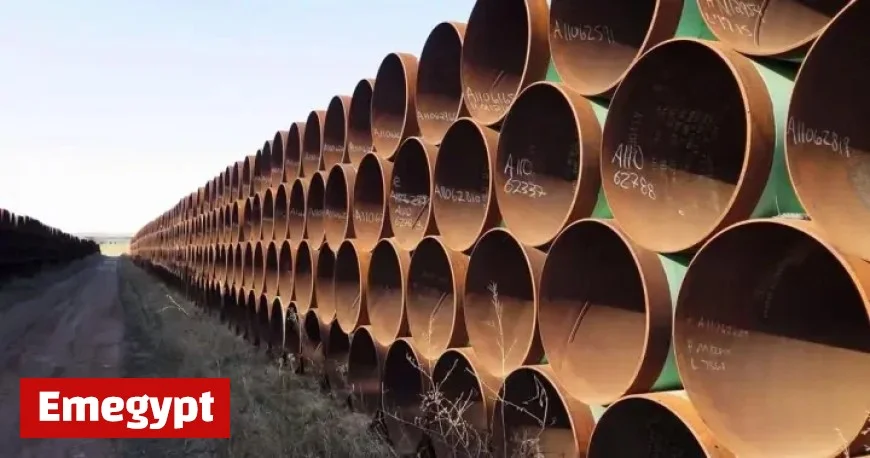
Recently, Alberta’s government and the federal administration reached an agreement to initiate discussions surrounding a pipeline to the British Columbia coast. This partnership, framed through a memorandum of understanding (MOU), has sparked mixed reactions among Indigenous groups within Alberta.
Key Partnerships and Financial Support
The Alberta Indigenous Opportunities Corporation (AIOC) has been designated as a significant partner in this initiative. AIOC’s representative, Channa Martineau, highlighted that this agreement represents a pivotal first step towards future collaborations. She emphasized the need for early consultation with Indigenous communities, stating that such discussions are crucial to avoid complications later in the project development.
The memorandum establishes that the project’s approval hinges on its perceived national interest and the potential it offers for Indigenous co-ownership and economic advantages. To date, the AIOC has facilitated nearly $745 million in loan guarantees for 43 First Nations.
Concerns Among Indigenous Groups
Despite AIOC’s involvement, several First Nations, including the Confederacy of Treaty 6, have expressed apprehension regarding the project. The Confederacy criticized the absence of their input in decision-making processes, asserting that they require representation at all tables where significant choices affecting their communities are made.
- The Confederacy’s treaty area covers much of the proposed pipeline route.
- The MOU stipulates that the pipeline could transport an additional 300,000 to 400,000 barrels of bitumen per day to Asian markets.
Impact of the Oil Tanker Moratorium Act
The memorandum also suggests possible adjustments to the Oil Tanker Moratorium Act. This law, enacted in 2019, prohibits tankers carrying more than 12,500 metric tonnes of oil from docking on British Columbia’s North Coast. The affected region encompasses a large coastal area, including Haida Gwaii.
Environmental Concerns and Historical Context
The project faces significant environmental scrutiny, particularly regarding the potential risk of oil spills. The Exxon Valdez disaster in Alaska remains a salient example of the catastrophic impacts such incidents can have. Rick Steiner, who responded to the Exxon Valdez spill, called the pipeline proposal ill-conceived, emphasizing the inherent risks associated with transporting crude oil by tanker.
Indigenous Relations Moving Forward
In light of these challenges, Alberta’s Minister of Indigenous Relations, Rajan Sawhney, has stressed the importance of open dialogue with Indigenous leaders. Recent discussions with Chief Kelsey Jacko of the Cold Lake First Nation were described as promising, focusing on building collaborative relationships.
As of now, no industry partners have emerged to support the proposed pipeline project, signaling a cautious approach from both Indigenous communities and potential stakeholders.