














End of Regulatory Independence Era?

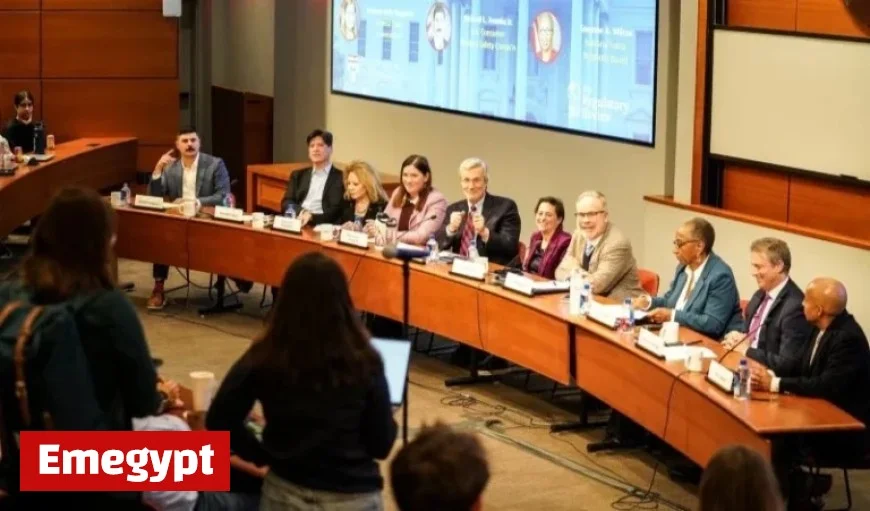
Recent discussions among leaders from independent regulatory agencies have brought to light the significant implications of actions taken by the Trump Administration to undermine their autonomy. These leaders convened at the University of Pennsylvania’s Carey Law School on November 12 to share their experiences and analyze the potential fallout from an ongoing Supreme Court case titled Trump v. Slaughter.
Understanding Agency Independence
Independent regulatory agencies, authorized by the U.S. Congress, operate through multi-member boards and commissions. The founding statutes provide these agencies with protections against arbitrary removal, a restriction upheld by the U.S. Supreme Court in 1935 in Humphrey’s Executor v. United States. However, the Supreme Court is currently considering whether to overturn this precedent in Trump v. Slaughter, which could eliminate these protections.
The Role of Independent Agencies
Panelists emphasized that the independence of their agencies is crucial for fulfilling public missions. For instance, the U.S. Office of Special Counsel aims to protect federal whistleblowers and enforce the Hatch Act, which ensures nonpartisan administration of federal programs. According to panel member Hampton Dellinger, without independence, enforcing such laws becomes impossible.
Threats to Independence
- Todd M. Harper, former chair of the National Credit Union Administration, revealed he learned of his dismissal while in a hospital.
- Gwynne A. Wilcox, from the National Labor Relations Board, received termination notice at night, although her removal was politically motivated.
- Travis LeBlanc, from the Privacy and Civil Liberties Oversight Board, was asked to resign via email shortly after the inauguration.
The Stakes of Trump v. Slaughter
The discussions underscored the potentially profound impact of Trump v. Slaughter on agency independence. Panelists agreed that removing protections may damage the credibility of the agencies and ultimately harm public interest. Susan Tsui Grundmann warned that undermining agency independence could have adverse effects for administration across party lines.
Consequences for Public Safety and Governance
Leaders highlighted that the erosion of agency independence could lead to detrimental outcomes, particularly in public health and safety. Alex Hoehn-Saric from the Consumer Product Safety Commission stressed the negative impact on safety regulations, while Richard L. Trumka, Jr. warned that lives could be lost if the agency cannot function effectively.
Conclusion
As discussions continue surrounding the future of independent regulatory agencies, the potential for long-term consequences remains a pressing concern. The panel at the University of Pennsylvania highlighted the necessity for maintaining agency independence to ensure effective governance and public confidence.
For further insights, a recording of the panel discussion is available on the Emegypt YouTube channel.