














SCOTUS Cases on Trump’s Firing Powers Could Reshape America

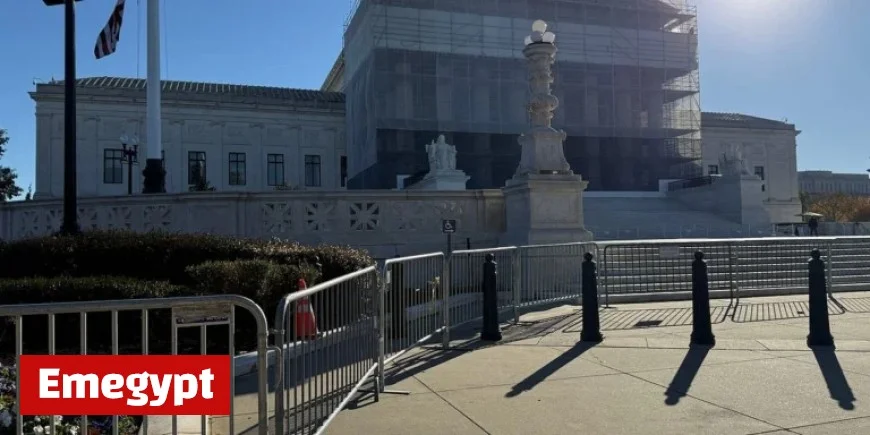
The upcoming sessions of the U.S. Supreme Court could significantly alter the balance of power between the executive branch and Congress. Justices are scheduled to hear arguments beginning December 8 and continuing into January, focusing on President Donald Trump’s attempts to dismiss federal officials despite statutory limitations crafted to ensure their independence.
Key Cases Addressing Executive Power
The Supreme Court is set to hear two pivotal cases concerning Trump’s firing powers. These cases are about whether the president can dismiss officials when restrictions enacted by Congress are in place. The legal debate centers on historical understandings of executive authority and the Constitutional boundaries established over time.
Historical Context
This legal issue traces its roots back to the constitutional convention in Philadelphia in 1787. The principle concept of executive removal powers has echoed through U.S. history, including notable cases involving Franklin D. Roosevelt and the Federal Trade Commission (FTC). In a landmark 1935 ruling, the court determined that Congress has the constitutional authority to limit the president’s removal powers.
- FDR and the FTC: Roosevelt’s attempt to remove FTC member William Humphrey emphasized the need for agency independence.
- Ruling Implications: The court concluded that Congress’s restrictions on removal powers were legitimate and constitutional.
The Impact on Current Legal Precedents
Recent years have seen the Roberts court grapple with these precedents. It has occasionally sided with the executive branch, allowing Trump to bypass removal restrictions under certain circumstances. Key cases have included attempts to terminate members of agencies like the National Labor Relations Board and Consumer Product Safety Commission.
Upcoming Arguments
The next oral arguments, particularly focused on Trump’s firing of Rebecca Kelly Slaughter from the FTC, could reshape interpretations of executive power significantly. The justices are likely to explore whether the constraints imposed by Congress on executive dismissals are still valid.
The Future of Congressional Authority
This examination is critical as it could lead to a new understanding of the dynamic between the presidency and Congress. A ruling favoring unrestricted executive removal could fundamentally change how agencies operate independent of presidential influence, posing substantial questions regarding constitutional governance.
- Potential Outcomes: The court’s decisions could either uphold historical limitations on executive power or expand presidential authority significantly.
- Critical Decisions: Cases involving Slaughter and Lisa Cook from the Federal Reserve Board will be closely watched for implications on agency independence.
As the justices prepare for these transformative discussions, the balance of power in American governance hangs in the balance. The outcomes of these cases will likely resonate for years, influencing how federal agencies function and the extent of presidential authority.