

















NVIDIA Advances Open AI Models at NeurIPS for Digital and Physical Development

Researchers across the globe are increasingly turning to open-source technologies. NVIDIA is expanding its portfolio of open AI models to enhance both digital and physical AI capabilities. The latest initiatives, showcased at the NeurIPS conference, aim to support diverse research applications.
NVIDIA’s Premier Presentation at NeurIPS
During NeurIPS, a leading AI conference, NVIDIA introduced a range of open physical AI models and tools. Among the notable releases is the Alpamayo-R1, a groundbreaking open reasoning vision language action (VLA) model tailored for autonomous driving. This model represents the first industry-scale application in this category.
Innovations in Digital AI
In digital AI, NVIDIA also unveiled new models and datasets targeted at speech AI and AI safety. Researchers from NVIDIA will present over 70 papers, workshops, and talks throughout the conference, highlighting advancements in AI reasoning, medical research, and autonomous vehicle (AV) development.
Open Source Commitment Recognized
NVIDIA’s dedication to open-source technology is underscored by recognition from the Artificial Analysis Open Index. This independent organization assesses AI technologies, and NVIDIA’s Nemotron family ranked among the most open in the industry based on model licenses and data availability.
Alpamayo-R1: Pioneering Autonomous Driving
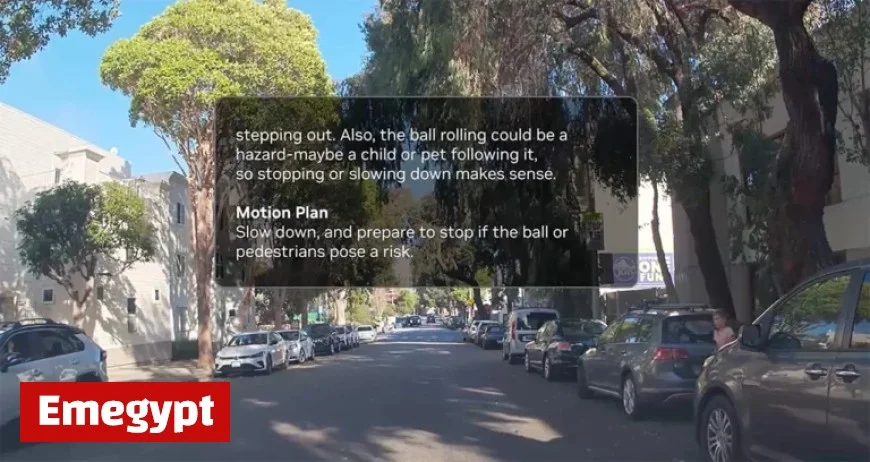
The NVIDIA DRIVE Alpamayo-R1 model integrates advanced AI reasoning with path planning, significantly enhancing AV safety in complex scenarios. Unlike previous models, AR1 effectively navigates challenging environments, making decisions similar to human drivers.
For example, in busy pedestrian areas, AR1 uses chain-of-thought reasoning to analyze situations, allowing it to adjust routes and make safer driving choices. This foundational reasoning capability improves AV performance in nuanced driving challenges.
Accessibility and Customization
Developers can access Alpamayo-R1 on GitHub and Hugging Face. The model’s open framework allows for customization to meet specific non-commercial research needs. Furthermore, reinforcement learning methods improve AR1’s capabilities post-training.
Custom AI Development with NVIDIA Cosmos
NVIDIA provides the Cosmos Cookbook, a guide for developers interested in leveraging Cosmos-based models. This comprehensive resource covers data curation, model evaluation, and synthetic data generation.
Examples of Cosmos Applications
- LidarGen: Produces lidar data for AV simulations.
- Omniverse NuRec Fixer: Addresses artifacts in data for simulations.
- Cosmos Policy: Converts large pretrained models into effective robot policies.
- ProtoMotions3: Offers a framework for training humanoid robots.
NVIDIA partners are utilizing Cosmos world foundation models (WFMs) for their latest AI initiatives. This innovation is exemplified by contributions from AV developers and various physical AI firms, enhancing the overall ecosystem.
Enhancing Digital AI Capabilities
NVIDIA is also augmenting its digital AI toolkit. New offerings include multi-speaker recognition models and tools for generating high-quality synthetic datasets.
- MultiTalker Parakeet: An automatic speech recognition system for overlapping audio.
- Sortformer: A real-time model for speaker differentiation.
- Nemotron Content Safety: An AI model for implementing safety policies across domains.
- NeMo Gym: An open-source library for reinforcement learning environments.
These tools empower developers to create secure and specialized AI models. The innovations will be showcased during the Nemotron Summit at NeurIPS, featuring insights from NVIDIA’s vice president of applied deep learning research.
The conference, running until December 7 in San Diego, serves as a platform for exploring these advancements in AI technologies.