















December’s Full Supermoon: Witness the Cold Moon Lighting Up the Longest Night of 2025

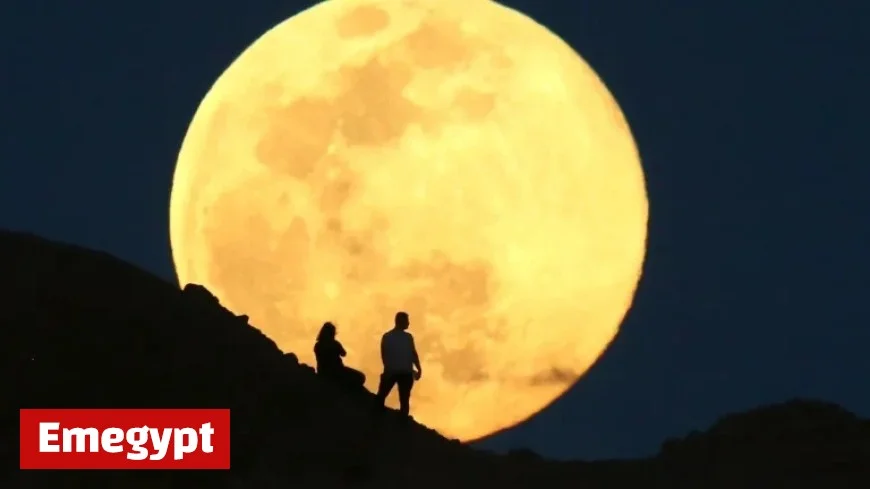
In December 2025, skywatchers can look forward to a spectacular astronomical event: December’s Full Supermoon, also known as the Cold Moon. This celestial phenomenon occurs during the longest nights of the year, captivating many with its large and bright appearance.
December’s Cold Supermoon: Key Details
The Cold Moon will rise on Thursday, December 4, 2025, with peak illumination occurring at 6:14 p.m. ET. It will be visible low on the horizon, which enhances its size and brightness. This supermoon will be the third and final installment of a series of consecutive supermoons in 2025.
According to the Old Farmer’s Almanac, this supermoon will reach its nearest point to Earth at approximately 221,965 miles. During this period, the full moon coincides with the start of the Geminid meteor shower, notable for its impressive display of shooting stars.
Geminid Meteor Shower
The Geminid meteor shower is anticipated to commence on the night of the Cold Moon, running from December 4 through December 17, with its peak occurring on the nights of December 13-14. Under optimal conditions, viewers can expect to see up to 120 bold, white meteors per hour, radiating from the constellation Gemini.
- Peak Viewing Time: Best seen around 2 a.m.
- Activity Start: As early as 9 p.m.
- Meteor Source: Asteroid 3200 Phaethon, not a comet.
Understanding the Cold Moon
December’s full moon is commonly referred to as the Cold Moon or Long Night Moon. This name reflects the frigid temperatures and extended nights characteristic of the winter season in the Northern Hemisphere. Other names for this lunar phenomenon derive from various cultural sources, including the Drift Clearing Moon and Little Spirit Moon.
Winter Solstice 2025
The winter solstice will take place on December 21, 2025, marking the shortest day of the year. On this day, daylight will last for approximately 9 hours and 17 minutes.
Upcoming Full Moons
The first full moon of 2026 will be the January Wolf Supermoon, expected to rise on Saturday, January 3, 2026. Skywatchers should mark their calendars for these impressive celestial displays.
For more details on moonrise times tailored to individual locations, consult the Old Farmer’s Almanac. Embrace the magic of December’s Full Supermoon and the mesmerizing Geminid meteor shower this winter season.