

















South Washington Coast Faces Thursday Coastal Flood Advisory

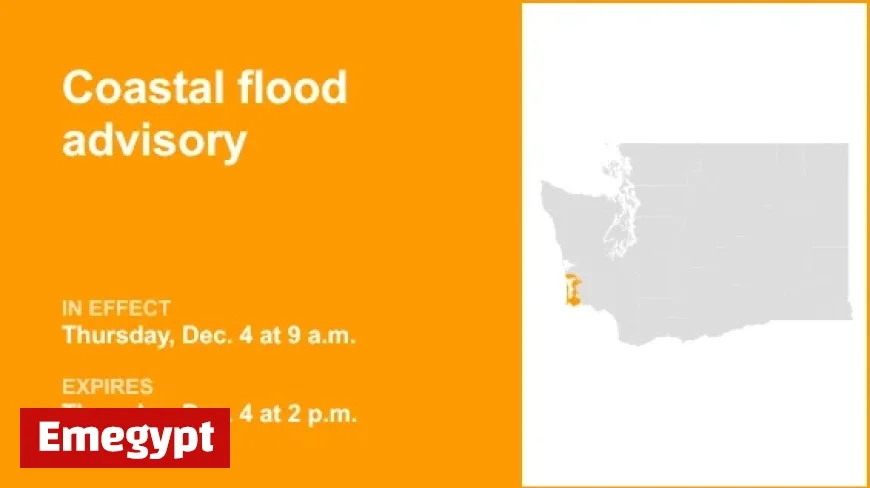
The National Weather Service (NWS) has issued a Coastal Flood Advisory for the South Washington Coast. This advisory, effective Thursday from 9 a.m. to 2 p.m., warns residents of potential tidal overflow flooding.
Details of the Coastal Flood Advisory
The advisory highlights the dangers of “Tidal overflow flooding expected.” Coastal residents are urged to stay alert as rising water levels can pose significant risks to life and property.
Beach Hazards Statement
- Tides may cause waves to run farther up the beach.
- Beware of sneaker waves, which can quickly pull individuals into the ocean.
- Extra caution is advised for those participating in razor clam digs.
The NWS emphasizes the importance of staying out of the water during this advisory period due to hazardous conditions. Residents within the warned area should take steps to ensure their safety.
Safety Tips for Flood Conditions
- Relocate to higher ground if you live in a flood-prone or low-lying area.
- If instructed to evacuate, leave immediately.
- Secure your home by locking doors and disconnecting utilities if time allows.
- Avoid areas where water has submerged electrical outlets.
- Watch for signs of electrical hazards like buzzing or popping sounds.
- Do not attempt to walk through floodwaters, as even six inches can knock you off your feet.
In case of becoming trapped by rising water, seek the highest point and contact emergency services by calling 911.
Driving Safely in Rainy Conditions
Flooding can occur quickly, especially in low-lying areas. The NWS advises against driving through water, as it can carry away vehicles with as little as 12 inches of fast-moving water.
- Use headlights to improve visibility for yourself and other drivers.
- Opt for middle lanes that are less likely to collect rainwater.
- Avoid driving through puddles to prevent hydroplaning.
- Keep a safe distance from larger vehicles to prevent water spray.
- If you encounter a flooded road, turn around and seek an alternative route.
Understanding Hydroplaning
Hydroplaning occurs when a vehicle slides uncontrollably on wet roads due to excess water preventing tires from gripping the pavement. If you do find yourself hydroplaning, here are some steps to regain control:
- Ease off the accelerator to reduce speed.
- Turn into the skid to help realign the tires.
- Wait for the tires to reconnect with the road before straightening the steering.
- Brake gently if necessary, depending on whether your vehicle has anti-lock brakes.
Residents of the South Washington Coast should remain vigilant and prepared as this Coastal Flood Advisory is set to take effect. Stay safe and heed all warnings from local authorities and the National Weather Service.