
















Sahara Sand Dunes Unveiled from Ancient ‘Black Mesas’ Visible from Space

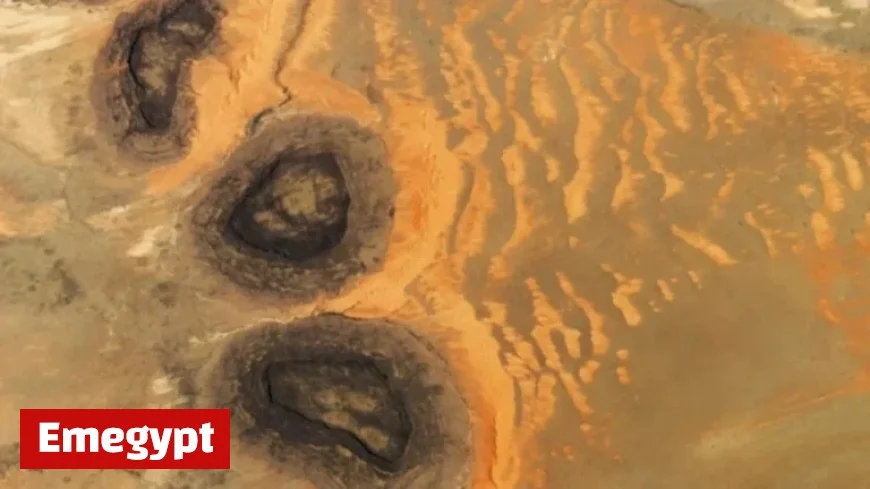
The Sahara Desert is home to remarkable geological formations, including three ancient black mesas near Guérou, Mauritania. These unique structures were recently captured in a photograph taken aboard the International Space Station on May 3, 2023.
Sahara Sand Dunes and Black Mesas in Mauritania
The mesas are located roughly 8 miles (13 kilometers) northwest of Guérou, a town with around 22,000 residents. They rise between 1,000 and 1,300 feet (300 to 400 meters) above the surrounding desert floor. The largest mesa spans approximately 6 miles (9.5 kilometers) at its widest point. A fourth mesa is situated just north but was not visible in the space photograph.
Formation and Characteristics
The dark appearance of the mesas is attributed to a natural process called rock varnish, which consists of a clay-based coating containing manganese and iron oxides. This varnish develops over thousands of years, aided by microorganisms that help stabilize the thin layers on exposed rock surfaces.
Sand Dune Dynamics
To the west of the mesas lies a barren rocky plain, devoid of sand dunes. In contrast, the eastern side features multiple sand dunes that seem to flow outward from the black mesas. The following types of dunes have been identified:
- Climbing dunes: These ridge-like formations accumulate along the eastern walls of the mesas.
- Barchan dunes: Commonly seen, these create a ripple effect extending along the mesas’ tails.
Both dune types display a reddish-yellow hue. The sand dunes on the eastern side form due to prevailing winds that transport sand towards the mesas, while wind scour keeps the western area clear.
Historical Context and Significance
The black mesas likely originated during the Paleozoic era, which lasted from about 541 million to 251.9 million years ago. Over millions of years, erosion has shaped these geological features. Nearby, the Richat Structure, also known as the “Eye of the Sahara,” is another fascinating formation found in northern Mauritania.
Global Mesas
While mesas are found worldwide, their unique concentration in the Sahara is noteworthy. They exist in several areas of the United States, including Colorado, New Mexico, Utah, and Arizona. Mesas have also been observed on Mars, shaped by centuries of wind erosion.
For further stunning visuals and additional insights from space, visit Emegypt. This exploration showcases the breathtaking natural phenomena of our ever-evolving planet.