


















Why Verstappen Avoided Hamilton’s 2016 Strategies in Thrilling F1 Abu Dhabi GP Title Showdown

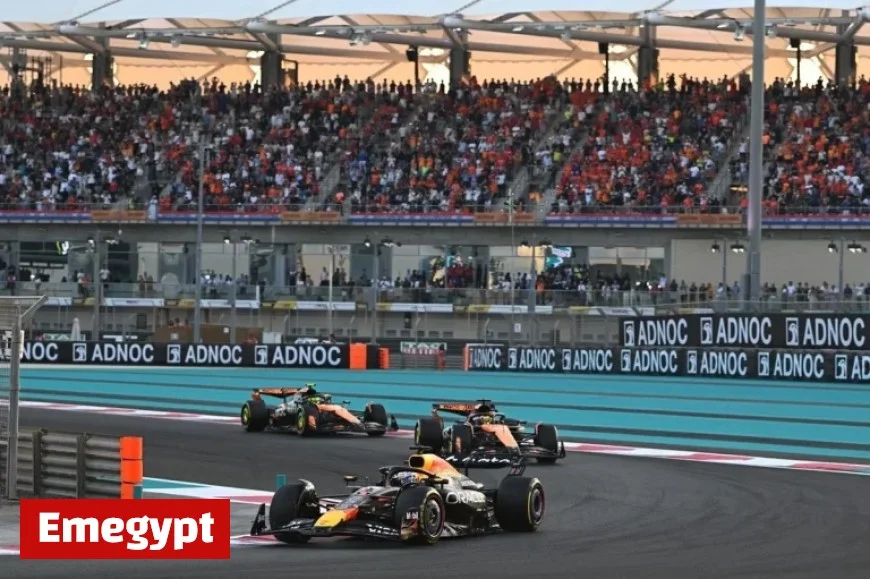
Max Verstappen’s recent performance at the Abu Dhabi Grand Prix marked a significant chapter in the 2025 Formula 1 season, although it did not result in a championship victory for him. Lando Norris was the championship frontrunner, coming into the season finale with a 12-point lead over Verstappen. In the race, Verstappen secured a dominant win, but Norris finished third, ultimately clinching the drivers’ title by a narrow two-point margin.
2016 Comparison: Hamilton’s Strategy Revisited
This finale echoed the tense 2016 title battle between Lewis Hamilton and Nico Rosberg. Hamilton entered that race with a similar 12-point deficit. He won the race after starting from pole but needed Rosberg to finish below him. In a strategic maneuver, Hamilton slowed down to allow other drivers to challenge Rosberg, ultimately leading to a finish where the top four were separated by just 1.7 seconds. Rosberg emerged triumphant that year by a mere five points.
Red Bull’s Challenges in 2025
Fast forward nine years, and Verstappen faced a situation where he could not overcome Norris’ advantage. McLaren’s Oscar Piastri also performed strongly, leaving Verstappen to compete against two McLaren cars. Red Bull advisor Helmut Marko reflected, “It was not quite enough, and it was one Red Bull against two McLarens.”
- Lando Norris finished third in the Abu Dhabi GP.
- Verstappen won the race but did not secure the championship.
- Piastri’s performance was critical in maintaining Norris’s title lead.
Marko noted that other drivers failed to support Verstappen’s bid, with Ferrari’s Charles Leclerc finishing seven seconds behind Norris. Teams struggled with tire performance, particularly Ferrari, whose tires deteriorated significantly after just a few laps. Marko pointed out that strategic tire choices were pivotal, as McLaren’s decision to start Piastri on hard tires complicated Red Bull’s strategies.
Strategic Considerations for Verstappen
Verstappen considered various strategies throughout the race. However, the complexity of the race dynamics made backing up the field unnecessary in the initial laps. Piastri’s long stint on hard tires meant that Verstappen’s attempts to bunch the pack could inadvertently benefit McLaren. The only viable time for such a strategy would have been towards the race’s end, but this would have required significant sacrifices on Verstappen’s part.
Verstappen concluded that while he contemplated several scenarios, the tire strategies of his rivals limited his options. The configuration of the Abu Dhabi circuit also presented added challenges, differing from the layout used in 2016. “This new layout around here makes it even harder to do that compared to 2016,” he noted.
This analysis indicates that Verstappen’s approach in the Abu Dhabi GP was influenced by various factors, including team strategies and track conditions, ultimately shaping the outcome of the race and the championship.