


















Inter-Clade Recombinant Mpox Virus Found in England in Traveler Returning from Asia

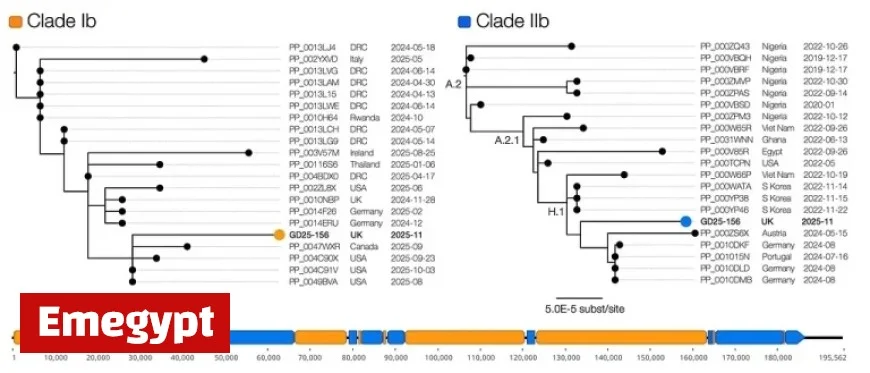
An inter-clade recombinant version of the mpox virus (MPXV) was recently identified in England. This case involved a traveler returning from Asia who tested positive for the virus.
Detection of the Mpox Virus
The UK Health Security Agency (UKHSA) conducted a thorough analysis. A vesicular swab obtained from the traveler was initially classified as belonging to Clade Ib. This classification was made using qPCR techniques focusing on specific genomic regions.
Genome Analysis
Using the ARTIC 2.5 kb tiling amplicon scheme combined with Oxford Nanopore sequencing, researchers obtained an 84% consensus coverage of the near-complete genome. Subsequent phylogenetic analysis revealed that the consensus sequence was notably distinct from established Clade Ib sequences.
Further confirmation indicated that this virus exhibits genome similarities with Clade IIb, suggesting it is an inter-clade recombinant.
Recombination Analysis
To verify this unusual pattern, multiple sequence analyses were performed. The following steps were taken:
- Amplification and sequencing were repeated on the original extract.
- A fresh extract from the same sample was analyzed.
- A second independent swab from the patient was examined.
- A VERO E6 cultured isolate from the initial swab was included.
Results indicated that all samples showed identical sequences, confirming the virus’s replication competency.
Genomic Alignment
Recombination tracts were aligned to both Clade Ib and Clade IIb reference genomes. This analysis yielded several findings:
- The putative recombinant was aligned to both clades, enabling SNP identification.
- Identified recombinant regions revealed significant genetic mixing between Clade Ib and Clade IIb.
The analysis highlighted numerous SNPs that were unique to the recombinant virus.
Global Implications
The discovery of this inter-clade recombinant mpox virus emphasizes the need for vigilant global genomic surveillance. It is critical in monitoring the emergence of new variants and assessing their potential health impacts.
Conclusion
This case serves as a reminder that mpox virus can evolve, and the detection of inter-clade recombinants may influence future public health strategies. Continued research and awareness are essential to tackle the challenges posed by evolving viral strains.