

















Labour’s Digital ID Proposal Criticized as a Civil Liberty Threat: Experts Argue ‘Not the Right Approach’

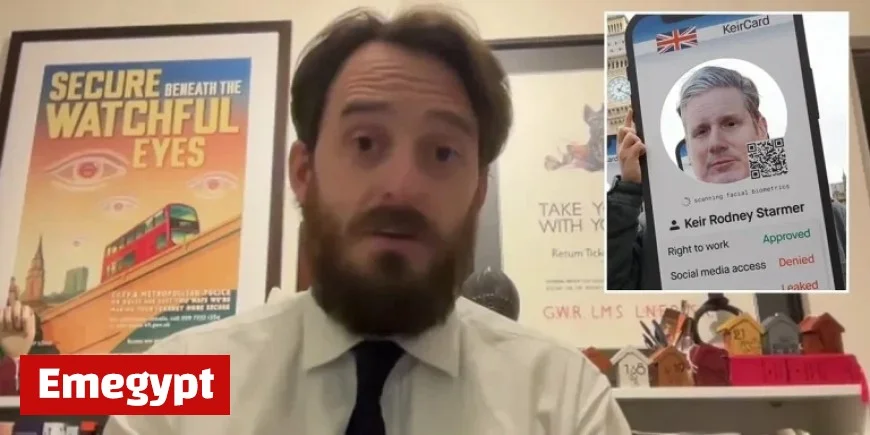
The proposal for mandatory digital ID cards by Prime Minister Sir Keir Starmer faces significant backlash. Critics argue that such a policy threatens civil liberties in the UK.
Digital ID Proposal Under Fire
Matthew Feeney, Advocacy Manager at Big Brother Watch, expressed strong opposition to the digital ID initiative during an interview with GB News. His remarks followed a protest organized by the group in Westminster, where numerous demonstrators gathered. This protest coincided with a petition against the policy that has garnered nearly three million signatures, highlighting widespread public discontent.
Public Reaction and Political Debate
The petition, initiated by Maxim Sutcliff, has prompted Members of Parliament (MPs) to engage in a formal debate regarding the digital ID proposal in the House of Commons. Feeney emphasized the revolutionary implications this ID scheme could have on the relationship between citizens and the state. He criticized the government’s lack of clarity on the scheme’s applications, questioning its intent and potential consequences.
- Protests: Over three million signatures collected against the proposal.
- Debate: Set to take place in the House of Commons today.
- Public Figures: Matthew Feeney of Big Brother Watch and Prime Minister Sir Keir Starmer.
Threat to Civil Liberties
Feeney articulated concerns that the digital ID could be a significant encroachment on personal freedoms. He referenced historical instances, such as ID requirements during World War II, warning that similar measures, once implemented, tend to expand beyond their intended scope. The ongoing debate highlights fears that such a scheme could be utilized for various government objectives beyond employment verification.
He cautioned that the government’s enthusiasm for using technology could lead to additional restrictions on freedoms. The proposal was criticized, with Feeney stating, “These kinds of schemes very rarely stay limited to their original purposes.”
Concerns Over Execution and Cost
Feeney also raised doubts about the feasibility of the digital ID project, predicting it could exceed its budget and take longer than expected. He emphasized that resources should not be allocated to a system that may not solve problems like illegal immigration or employment fraud effectively. Instead, he proposed seeking solutions that do not compromise civil liberties.
As the debate unfolds, many continue to question whether the digital ID initiative is the right approach for the UK. The call for transparency and accountability remains strong among advocates for civil rights.