


















Japan Earthquake Leaves at Least 30 Injured in Powerful Tremor

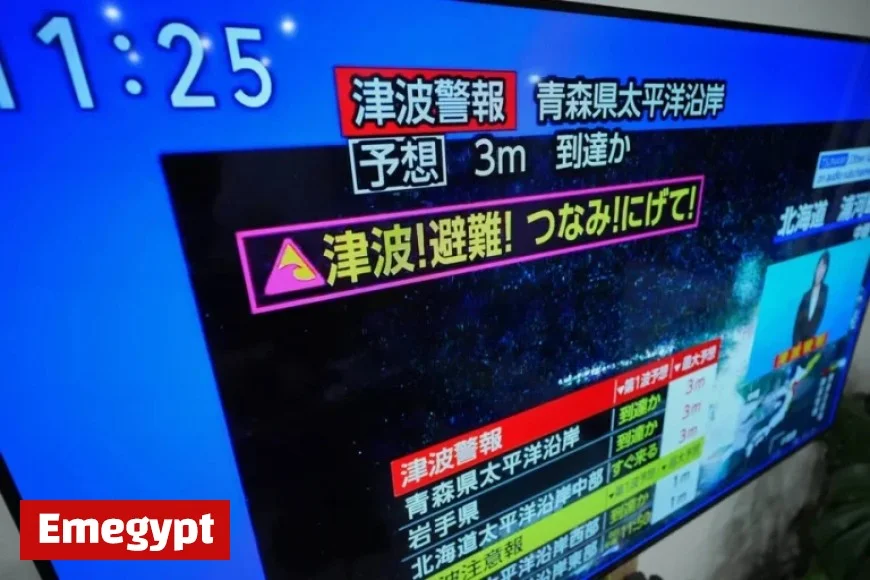
A powerful earthquake struck northern Japan late Monday, resulting in at least 30 injuries. The tremor, initially recorded at a magnitude of 7.6 and later rated at 7.5, hit off the coast of Aomori Prefecture at 11:15 PM local time (9:15 AM EST). The Japan Meteorological Agency (JMA) reported tsunami waves of up to 70 centimeters in height and urged residents to stay alert for potential aftershocks.
Government Response and Evacuations
Japan’s Prime Minister, Sanae Takaichi, advised citizens to monitor updates from the JMA and local authorities. She emphasized the importance of securing belongings and being prepared for evacuation if necessary. Among the injured, a serious case was reported on Hokkaido, the northernmost island of Japan.
Impact on Local Communities
- Approximately 28,000 people were advised to evacuate the affected areas.
- In Sapporo, locals experienced strong shaking that lasted for about 30 seconds.
- Residents reported broken glass on roads and items scattered in shops.
As dawn broke on Tuesday, damage was noted on several roads, with snow starting to cover the area. Daiki Shimohata, a 33-year-old municipal worker from Hashikami, recalled how he rushed out of his home with his two young children when the shaking began, likening it to the traumatic experience of the 2011 Fukushima disaster.
Service Disruptions
The earthquake temporarily disrupted power for around 2,700 households in Aomori, with some still lacking electricity the following morning. Train services on the Shinkansen bullet train were halted in certain areas to inspect rail safety.
Seismic Risks in Japan
Japan remains vulnerable to seismic activities, positioned at the convergence of four tectonic plates in the Pacific Ring of Fire. The nation faces an average of 1,500 earthquakes annually, with varying impacts depending on location and depth.
A government expert panel recently increased the likelihood of a significant earthquake in the Nankai Trough over the next three decades to between 75% and 82%. Projections suggest that such an event could lead to up to 298,000 fatalities and economic damages reaching $2 trillion.
The JMA had initially issued a tsunami warning for waves that might reach 3 meters, advising residents near the epicenter to evacuate promptly. Fortunately, nearby nuclear power plants, including Higashidori and Onagawa, reported no anomalies. The trauma from previous catastrophic events continues to influence public awareness and preparedness in the region.