
















Poilievre Initiates Key Vote on Motion Concerning Liberal Pipeline Support

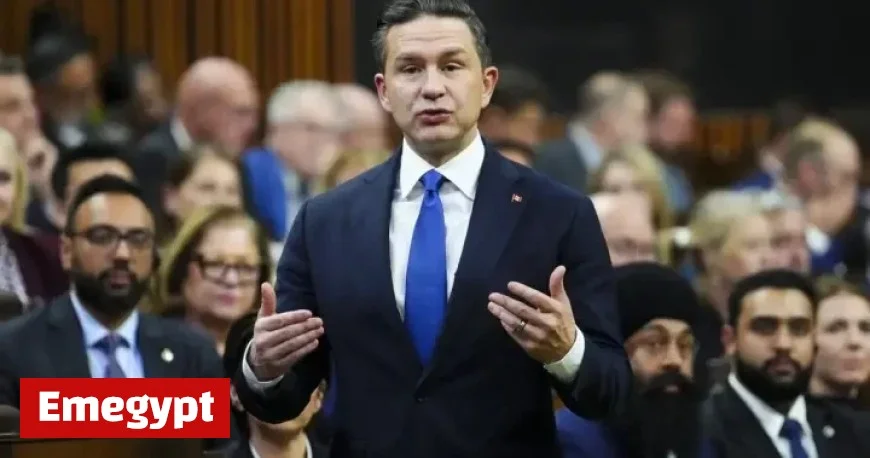
The Conservative Party leader, Pierre Poilievre, is pushing for a critical vote regarding Liberal support for a new pipeline leading to the West Coast. This motion is set for debate and a recorded vote in the House of Commons on Tuesday.
Key Proposals in the Motion
Poilievre’s initiative aims to compel the Liberal government to reaffirm its commitment to the pipeline and potentially lift the Northern British Columbia oil tanker ban. This proposal has met opposition from the Coastal First Nations and the British Columbia government.
The motion references a recent memorandum of understanding (MOU) signed between Alberta and Ottawa, which outlines the goal of constructing a bitumen pipeline to facilitate oil exports to Asia from an undisclosed deep-water port in British Columbia.
Memorandum of Understanding Details
The MOU emphasizes the federal commitment to foster this pipeline project, including possible adjustments to the Oil Tanker Moratorium Act if required. The motion explicitly mentions the necessity for consulting Indigenous Peoples while proceeding with pipeline development.
Political Reactions and Opposition
- Poilievre challenged individual Liberal MPs to declare their stance on the pipeline and the tanker ban, which has been enforced since 2019.
- Energy Minister Tim Hodgson denounced the motion as a “cynical ploy” designed to create division and labeled it a political stunt.
- Indigenous Services Minister Mandy Gull-Masty criticized the motion, viewing it as a waste of parliamentary resources and disrespectful towards Indigenous communities.
Gull-Masty emphasized that the MOU obligates both levels of government to consult and seek approval from British Columbia and Indigenous groups affected by the proposed pipeline.
Concerns Over Environmental Impact
The 2019 oil tanker ban has adversely impacted multiple pipeline projects, such as the Northern Gateway and Eagle Spirit projects. The Conservative Party, along with successive Alberta governments, advocates for the repeal of the ban, arguing that it constrains the oil and gas sector.
Meanwhile, the B.C. government and Coastal First Nations committed to uphold the tanker ban, reflecting the ongoing struggles over pipeline development in the region.
Future Implications and Internal Liberal Dynamics
Corey Hogan, a Calgary MP, noted that a “yes” vote on Poilievre’s motion could indicate a lack of seriousness in consulting with B.C. and Indigenous groups. Conversely, a “no” vote might suggest reluctance to support the pipeline.
Despite the challenges, both provincial leaders and Indigenous representatives stress the importance of collaboration and respect for community sovereignty in addressing pipeline development.
Conclusion
The outcome of Poilievre’s motion will serve as a litmus test for Liberal support of the pipeline proposal, with potential ramifications for party unity and environmental policy in Canada. As debate continues, the commitment to sustainable practices and consultation with diverse stakeholders remains a contentious focal point in this discussion.