











Rising Far Right Tensions in Australia Reach Unprecedented Levels

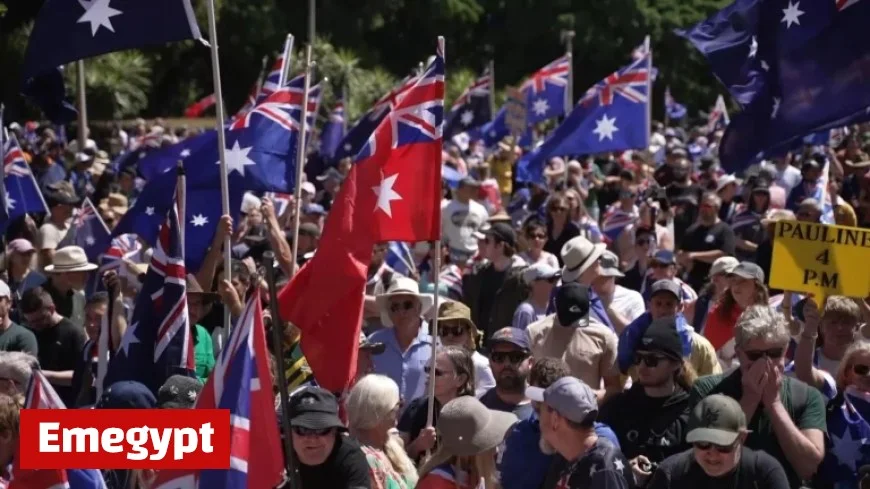
Australia is experiencing rising far-right tensions, with significant protests primarily centered on the issue of migration. Over recent months, demonstrations have escalated, highlighting a growing divide among the populace.
Protests Across the Nation
In August, approximately 50,000 individuals participated in protests nationwide. Conflicts arose during rallies in Melbourne, where far-right and far-left groups clashed. Tensions continued into October, culminating in further protests that led to accusations against leftist groups for violent confrontations with right-wing demonstrators.
Dwindling Migration Rates
During the COVID-19 pandemic, strict border closures resulted in a sharp decline in migration. Following these measures, Australia experienced a surge, bringing in about 1.4 million new migrants. However, recent statistics from the Australian Bureau of Statistics reveal that net overseas migration has decreased by nearly 40% since its peak post-COVID.
Many Australians still express concerns about immigration levels. Some argue that current infrastructure is insufficient to accommodate the influx of newcomers. According to Cumberland City councillor Steve Christou, “put a stop to excess immigration until the country’s infrastructure can keep up” is a pressing need.
Multicultural Communities
Australia’s multicultural essence shines in suburbs like Auburn, where nearly 80% of families speak a language other than English at home. Protesters at recent rallies voiced their pride in Australian culture while also expressing frustrations about the housing crisis and rising living costs.
Far-Right Groups Gaining Momentum
Instances of far-right ideology are becoming more visible. In August, demonstrations in Melbourne and Sydney saw the presence of neo-Nazi groups. Reports indicate these groups have gained confidence, disrupting anti-racism events and attempting to influence public discourse.
Dr. Josh Roose, an expert on far-right movements, emphasized that these groups are attempting to normalize extreme ideas. At a national rally in October, far-right organiser Bec “Freedom” aimed to distance her group from neo-Nazi affiliations while acknowledging their participation under the condition of non-violence.
Public Response and Government Action
On November 8, a shocking gathering of more than 60 neo-Nazis at the New South Wales state parliament raised alarms across the nation. The public outcry prompted the state government to enforce stricter regulations against displays of neo-Nazi symbolism.
Political Controversies and Future Outlook
The political landscape is also shifting. In November, Pauline Hanson, the leader of the far-right One Nation party, sparked controversy when she donned a burqa in parliament, advocating for a ban on such garments in public. Her party’s rising support indicates a growing appeal among voters dissatisfied with mainstream parties.
As protests indicate a wider societal division, the Australian government faces the challenge of addressing immigration concerns while maintaining social cohesion. Rising far-right tensions reflect not only domestic anxieties but also a global trend that requires careful consideration and response.