
















India Criticizes Pakistan at UN for Granting Lifetime Immunity to Asim Munir While Jailing Imran Khan

India has formally expressed its discontent over Pakistan’s claims regarding Jammu and Kashmir during a recent session at the United Nations Security Council. In an Open Debate titled “Leadership for Peace,” India’s Permanent Representative to the UN, Ambassador Harish Parvathaneni, asserted that the Union Territories of Jammu and Kashmir and Ladakh are firmly part of India, stressing their inalienable status.
India’s Stance on Jammu and Kashmir
During the debate, Parvathaneni criticized Pakistan’s continuous focus on India. He described Islamabad’s attempts to undermine India and its people as “obsessive.” Parallel to this, he addressed the issues surrounding the Indus Waters Treaty, which India recently announced it would suspend.
Parvathaneni labeled Pakistan as the “global epicentre of terror.” He highlighted that India had entered into the Indus Waters Treaty with goodwill. However, he stated that Pakistan’s repeated violations, including instigating wars and terror attacks, have led to significant loss of life in India.
Terrorism and Violence
- In the past four decades, tens of thousands of Indian lives have been lost due to Pakistan-sponsored terrorism.
- In April earlier this year, a terror attack in Pahalgam, Jammu and Kashmir, resulted in the deaths of 26 civilians, including a foreign national.
Amid these circumstances, India declared that it would suspend the Treaty until Pakistan can convincingly end its support for terrorism. This decision underscores India’s commitment to counter Pakistan-sponsored terror with determination.
Political Situation in Pakistan
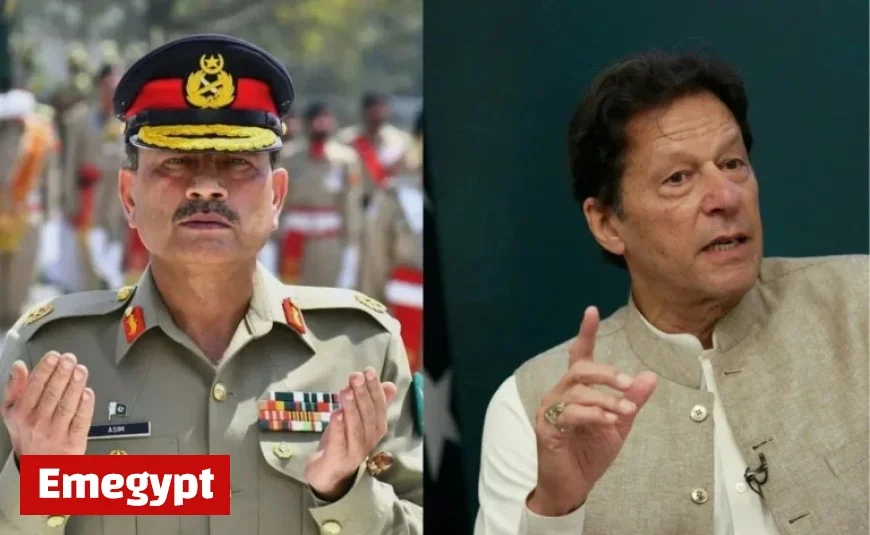
Parvathaneni also commented on the political landscape within Pakistan, highlighting the recent imprisonment of former Prime Minister Imran Khan. He criticized the jailing of a prime minister, the banning of the Pakistan Tehreek-e-Insaf (PTI) party, and the introduction of the 27th amendment, which he claimed grants lifetime immunity to Chief of Defence Forces Asim Munir.
He articulated that this situation reflects Pakistan’s unique approach to democracy, which includes sidestepping the will of the populace and enabling military overreach.
Response from Pakistan
Pakistan’s representative, Asim Iftikhar Ahmad, responded to India’s statements by reiterating claims of Jammu and Kashmir as an “unresolved dispute.” He emphasized that peace in South Asia cannot be achieved through unilateral actions, calling for a just settlement in light of existing UN resolutions.
Ahmad denounced the suspension of the Indus Waters Treaty as a “blatant breach of international obligations” by India. This exchange underscores the ongoing tensions between the two nations regarding territorial claims and governance issues.
Conclusion
The recent UN debate highlights the deep-rooted tensions between India and Pakistan, particularly surrounding Jammu and Kashmir and the implications of the Indus Waters Treaty. As both countries continue to advocate for their positions, the call for peaceful resolution remains critical for stability in South Asia.